Monday, April 28, 2014

Asian Women in America

    America. The land of opportunity and the ideology where dreams come true, where every single individual has the right to achieve these dreams and are naturally created to be equal. During the 1800's was when the Asian American community, especially those of Chinese heritage, waved along the American homelands. And it wasn't long until they were experiencing heavy racial issues and discrimination. Many Chinese immigrants in particular often worked as railroad laborers with unequal wages that was commonly known as "cheap Chinese labor". But unfortunately it wasn't just the average Chinese man receiving all the racial discrimination.

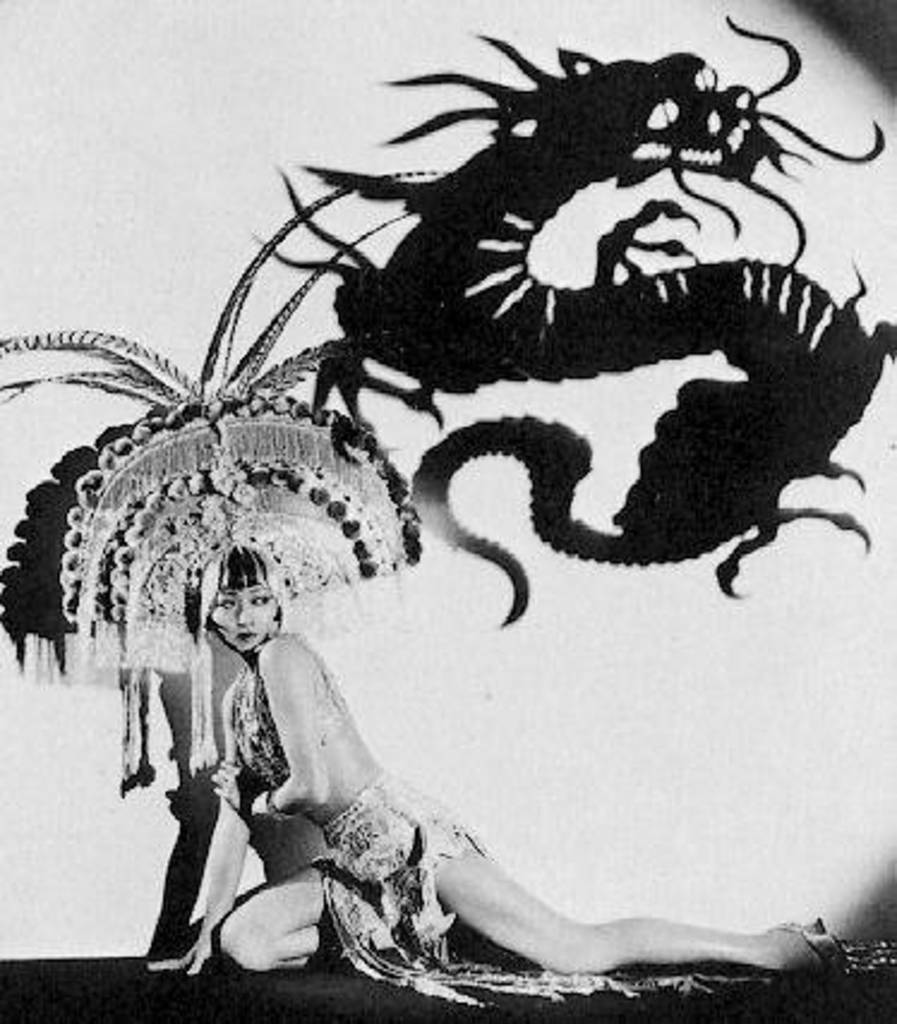
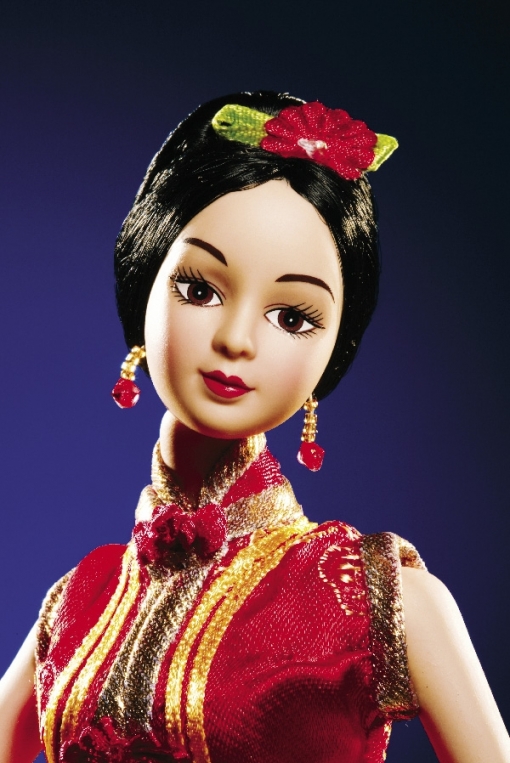
     In my opinion, I believe that the gender roles played a huge role in how Asian American immigrants were treated in the United States. Unfortunately, I also believe that the women was targeted with different racial issues compared to men. Many common words often sound too familiar in regards to Chinese women in general, such as the "dragon lady" which was a Western saying to call a woman to be stereo-typically mysterious or sneaky, from common racial concepts of how Asian American women are perceived by the "dominant" White population. Another slang that was in favor of the Asian American women is a "China doll", the idea of Asian women being delicate, beautiful, and fragile just as a China doll would be.

     While many laws were being passed and regulated to eventually abolish the Chinese people in the United States, it came to show that there was a huge wave of prostitution by Chinese women. It didn't take long until news struck of these poorly treated Chinese women who worked under prostitution either partly tricked, abducted by others, or brought upon for trade in America. By the new wave of Asian prostitution, the ideology of Chinese women and men were slowly deteriorating. Soon, Americans eventually banned the immigration of those with Asian heritage. The Page Act of 1875 was the first federal immigration law that spoke directly to the Asian population. This Act was believed to pledge that all immigrants from Asia entering America was considered to be undesirable for the common good in the United States. With racial discrimination of gender roles in the Asian American community, and with different racial segregation laws and treatment, it was a huge epidemic for the Asian American population living in America during this time. It wasn't until after World War II where the United States and China fell under alliance, and eventually had things turned around in immigration and in the ways Americans perceive Asian Americans. 

Thursday, April 24, 2014

Asian American Stereotypes

            There are many stereotypes that follow Asian Americans around in their daily life. So, where did these stereotypes originate? What are their benefits? What are their negative consequences? First, let’s look at different stereotypes for both men and women.
            Stereotypes for Asian American men and women differ. First, lets view Asian American male stereotypes. Asian American men are often feminized, or seen as the effeminate-sinister-Fu Manchu. Men can also be viewed as gangsters, or the amazing Kung Fu master.
Asian American women are stereotyped oppositely. Women are seen as the sexual-scheming-dangerous Dragon Lady. Or Asian American women are seen as the delicate-submissive China Doll. Often Asian American women are hyper-sexualized.
           These stereotypes have historical roots in society. For men, these stereotypes date back to the Chinese Exclusion Law and the anti-miscegenation laws. Chinese were brought to work on railroads, however their wives and families were left back in China. This made Chinese women scarce in the United States. The men were prevented from associating with other races of women due to anti-miscegenation laws. The few amount of jobs available made it so Asian American men took “feminine” jobs, like laundromats, made them appear more feminine to outsiders. For women, due to large numbers of army bases near their areas, often worked as prostitutes leading to their hyper-sexualization. When the United States made contact between themselves and Asia, it was military and these were the only experiences they had. Due to this, the stereotype was created and has not left.
           What are the consequences of these stereotypes? For Asian American men, they are less likely to be married. This is due to the fact that broader society views them as feminine. This causes them to also view themselves as effeminate. For Asian American women, they are easily objectified. The women are seen as sex objects and often fetishized. Both Asian American men and women are detached from their social roots. They do not want to surround themselves with other Asians because they also feel the racism against them.  Also, for both sexes their self-esteem is lowered. This is due to the fact that they internalize the racism against themselves. The race and gendered stereotypes against Asian Americans has seriously negative consequences. Due to the views of others imposed on them, suicide rates are high, as well as isolation. Asian identity is seen as very alien and highly stigmatized. This causes Asians to buy into stereotypes of other Asians and themselves. They are embarrassed by those less Americanized.
              I can relate to the stereotypes put on Asian Americans, particularly women. As a young blonde I am expected to be dumb, submissive, and also attractive. I have lived with this stereotype all of my life. I was always intelligent. Started in elementary school I took gate classes, and was often in classes above my grade level. When my parents bragged about me to their friends, no one believed them. I was only supposed to be a pretty face. When I graduated High School with a 4.4 GPA, with honors, and over twenty college units completed, still no one believed I could be intelligent. Also, I often go out in sweats with "messy" hair. I am always stopped by other individuals telling me I'm not supposed to look like that, because I am a Barbie Doll. Being called a Barbie Doll is the most offensive term for me. I get incredibly offended and no one can understand why. I am a person, and want to be seen as me and not a Barbie Doll. Like a China Doll, Barbie Dolls are not real people but instead social constructions of what women are supposed to act and look like.

Wednesday, April 23, 2014

Gaysians


     Homosexuality is a topic of continuous debate. While in recent years it has developed into an issue with which more individuals have become accepting of, there remain members of society who continue to have qualms with it. Unfortunately, within this realm of naysayers all too often fall the parents of individuals who are homosexual, which can cause familial conflict and hardship. Asian Americans, of course, are not exempt from this situation, for there does exist a sizeable homosexual community that like all other communities, faces similar challenges.

Perhaps the largest challenge in being gay or lesbian is the fear of acceptance; wondering what others’ opinions will be once such individuals have ‘come out’. It is a fear that prolongs the act of coming out, requiring time to gather the mental strength to admit to those around them of their sexuality. This is more than likely true for all of the homosexual community, ethnicity and race notwithstanding. Still, it is worth regarding what –or at least some of what- conditions make coming out in Asian American society a challenge. In this regard, maybe the largest challenge that presents itself is, as both noted by Tommy Tseng in a study of Chinese-Americans and Alice Y. Hom in Stories from the Homefront, a strong traditional adherence to male and female gender roles that is commonly expressed by many Asians. This traditional viewpoint where men are to be ‘men’ and women are to be ‘women’ creates discomfort with those who are gay or lesbian, as individuals within such relationships are seen to not follow tradition. Also a viewpoint noted by Tseng is an “ick” factor, which corresponds to any arguments that follow an “it just isn’t natural/doesn’t feel right” position. With such viewpoints regarding homosexuality, it is understandable how the matter of coming out can be seen as an insurmountable task for any Asian American facing it; one never knows how his/her parents will react to the news and whether or not they will be accepting and supportive further down the line.

At this point, I could turn this blog post into either a pro-gay or anti-gay post. However, I intend to do neither. Without explicitly offering my opinion on homosexuality in the Asian American community –or homosexuality in its entirety- what I will offer is this: things simply aren’t the way they were before. Times have changed, and people are more willing to go against societal norms in the pursuit of what they feel is acceptable. Homosexuality will always have its supporters and naysayers, but regardless of one’s sexual orientation, interpersonal dealings should always be respectful; something that really should not at all be hard to do. 

Cloud Atlas?! More Like Cloud of Racism

About a week ago, I stumbled across a fairly recent movie by the name of Cloud Atlas (2012), starring Tom Hanks, Halle Berry, Hugo Weaving, Jim Sturgess, and some more prestigious actors. It tells the story of a sort of reincarnation narrative in which each character’s actions and personalities affect others in their past, present and future in the form of vignettes. This is done all while keeping the same recurring cast by changing their appearances during time periods with extensive hair and makeup. Although I enjoyed the plot and character development, one thing stood out to me the most: Yellowface and hypersexualization of Asian women. After watching this movie, only one question crossed my mind: Why is Yellowface still being used in today’s films? {WATCH a clip from the movie}
            In this vignette within the movie, the characters reside in a futuristic place called Neo Seoul, which is in Korea and it is sustained on consumerism. This dystopia-like place is characterized by two types of beings: consumers who are labeled “pure bloods” portrayed by the non-Asian actors as Asian men and cloned human women who serve the pure-bloods and are named “fabricants” who are actual Asian women. These fabricants serve as actual waitresses, however along with that, they serve the pure-bloods in a sexual way in order to bribe them to reach redemption. The men are also represented as depraved, sexually deviant and corrupt officials who take advantage of the fabricants. In addition, the Asian women in this vignette hold strong and traditional representations as they did in films fifty years ago. In a movie about the future, it is compelling to see concurrent themes of racism seen throughout movies in the past. 


            The act of making the White actors Asian with prosthetics seems to be serving the purpose of the reincarnation narrative; however, it is no different from the racist representations shown in Breakfast At Tiffany’s. Was it an attempt to “blur” the race factor?  Due to the fact that the Yellowface is so noticeable, it only enhances the race factor within this movie. These characters are given a typical “Asian look” with slanted and hooded eyes and they all have British accents yet want us to believe they all look the same and are of Korean descent- a stereotype commonly used, that all Asians look the same. If Production wanted the characters to look Asian, they could have casted a few extra Asian actors as main characters. Perhaps another reason for this was to somehow show that racism, as well as gendered stereotypes will never die, and even so, it was a horrible attempt because the use of Yellowface was so horrendous.

            Yellowfacing and hyper sexualized Asian women are still being used in films today. This is because racism is so rampant within today’s sociological norms. Due to the historical roots of these depictions, there is a difficulty in abandoning the examples of racism in Hollywood’s films.  These representations of Asian men and women, as well as stereotypical facial features are so engrained in us that we have generated movies that have racist touches by both subconscious and conscious efforts; not all of these representations are by “accident” in that it is done to produce a reaction and effect from the general public. The fact of the matter is that just as racism is not dead, neither is the act of Yellowface or the stereotypical representations of all Asians in media and film.  As long as this continues through popular culture, it will keep affecting Asian Americans in negative ways. Almost as a self-fulfilling prophecy, many Asian Americans internalize the racism, stereotypes and discrimination, and become detached from their own cultural roots to stray away from the shame placed on them. For many minorities, especially Asian Americans, they buy into these racial stereotypes to support the discourse for racial hegemony from the superior white man against the others.